Best AI-Powered Transcription Services: 12 Leading Services Compared
Best Voice Analytics Software: 10 Leading Voice Analytics Platforms Compared
October 2, 2026


According to Zendesk’s CX Trends 2026 report, 87% of CX leaders say AI has improved customer interactions, but 83% of consumers say there’s room for improvement. According to Master of Code, customer support teams are facing significant increases in customer expectations on response speed (63%), empathy (43%), resolution speed (57%), knowledge (49%), and availability (49%).
The right voice analytics software can help teams meet these rising customer expectations by giving them real-time visibility into every customer interaction, rather than a small sample of calls that supervisors have to manually review. Below, we break down the top voice analytics platforms available today to help you find the right fit for your team.
In this article:
- Velma
- Verint
- Observe.ai
- CallMiner
- Genesys
- NiCE CXone
- Enthu.AI
- Xdroid VoiceAnalytics
- C360 (formerly Call360)
- Level AI
- Best Voice Analytics Software Comparison Chart
- What is Voice Analytics Software?
- How Voice Analytics Software Works
- Voice Analytics vs. Speech Analytics vs. Conversation Intelligence
- How To Choose the Best Voice Analytics Software
- Frequently Asked Questions
Velma
Overview
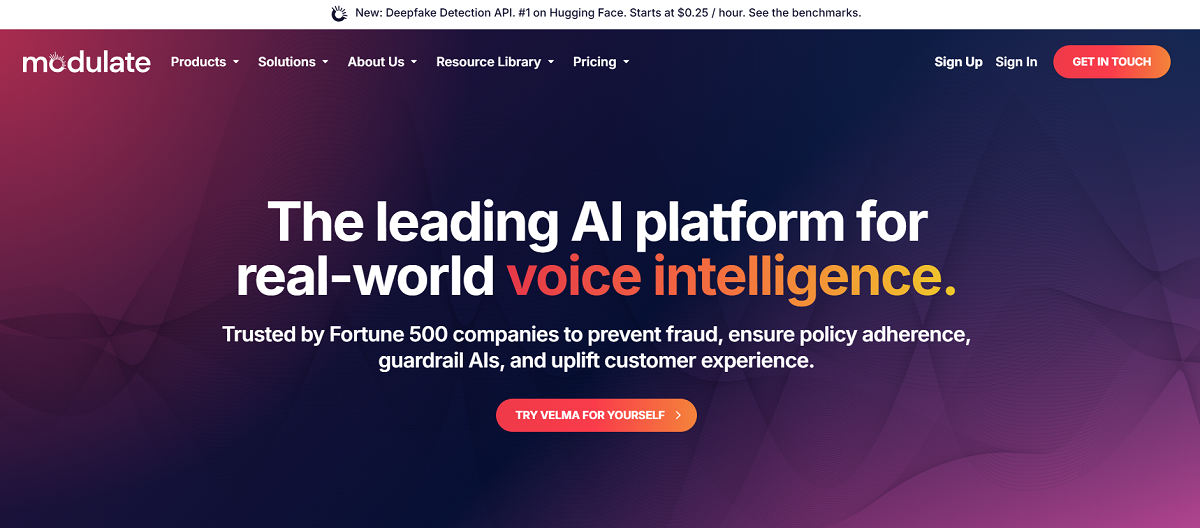
Velma is a voice intelligence platform that helps organizations understand what’s happening within a conversation in real time. While traditional voice analytics platforms rely solely on transcripts or keyword matching, Velma processes voice audio to detect emotion, conversational patterns, stress, manipulation tactics, escalation, and synthetic voice markers. Built on Modulate’s Ensemble Listening Model (ELM), Velma is powered by voice-native AI technology that understands not just what was said, but how it was said.
Velma is used in contact centers and other high-risk voice applications, such as financial services, to listen to live and recorded calls, detect frustrated customers, identify coaching moments, flag fraud attempts, and detect suspicious caller behavior. Contact centers can now identify deepfake audio and social engineering attacks in real-time with Velma, allowing supervisors and fraud teams to intervene before fraud occurs. Velma has been trained on more than 500 million hours of real-world calls, so it doesn’t require weeks of tooling to become proficient. Instead, Velma offers out-of-the-box accuracy.
Key Features
Real-Time Voice Intelligence: Velma’s listening algorithms operate on live calls, surfacing real-time alerts when it detects hints of escalation, frustration, abuse, fraud, or violations, allowing supervisors to intervene and de-escalate before damage is done.
Ensemble Listening Model Architecture: Rather than sending a transcript through a single LLM, Velma runs dozens of specialized models in parallel, each trained and optimized to detect a specific aspect of voice conversations (emotion, stress, deception, conflict, synthetic voice markers, background noise, etc.). These signals are integrated through an orchestration layer to provide a high-confidence, auditable interpretation of not just what’s being said, but how it’s being said.
Fraud and Social Engineering: Velma recognizes urgency cues, coercive language, manipulative phrases, and suspicious language patterns associated with refund fraud, account takeovers, phishing, and other social engineering scams. Get alerts in real time so your agents and supervisors can act before the fraud occurs.
Deepfake and Synthetic Voice Detection: Velma inspects the audio stream to detect spoofed, cloned or AI-generated voices in real time, identifying synthetic callers before they can scam agents or takeover customer accounts.
Emotion and Sentiment Analysis: Instead of analyzing keywords to determine sentiment, Velma detects emotional signals from the voice itself, including stress levels, anger, urgency, and tonal shifts, enabling contact center leaders to understand customer experience on a deeper level throughout every call.
Agent Protection and Well-Being: Velma can be configured to detect and score rude, abusive or aggressive calls and notify supervisors when an agent is confronted with a harassing caller. Velma can also remind agents to take a break after a tough call to improve wellness and reduce burnout.
Conversation Analytics and Reporting: Teams can identify coaching opportunities, quality trends and create customizable compliance reports. Every insight can be traced back to the exact moment in the conversation.
Seamless Integrations: Velma works with the voice infrastructure contact centers are already using. Five9, Genesys, Zoom, Microsoft Teams, Zendesk and SIP-based phone systems all integrate with Velma via APIs, webhooks, or through pre-built integrations. You can deploy in minutes and add intelligence without changing what you already have.
Pros
- Processes voice directly, eliminating inaccuracies introduced by transcripts or keyword-spotting
- Captures emotion, stress, tone, and behavioral insights that are invisible to text-based analytics tools
- Real-time detection alerts supervisors to take action during an interaction, not after the fact
- Highly accurate deepfake and synthetic voice detection included out of the box
- Audio intelligence trained on over 500 million hours of real conversation to provide accurate analytics without weeks of customization
- Costs up to 90% less than LLM-based alternatives
Cons
- Teams with a low call or audio volume (i.e., a few hours per month) may not be able to leverage the full value of voice analytics features
- Teams new to conversation analytics may require training on voice analytics insights
Verint
Overview
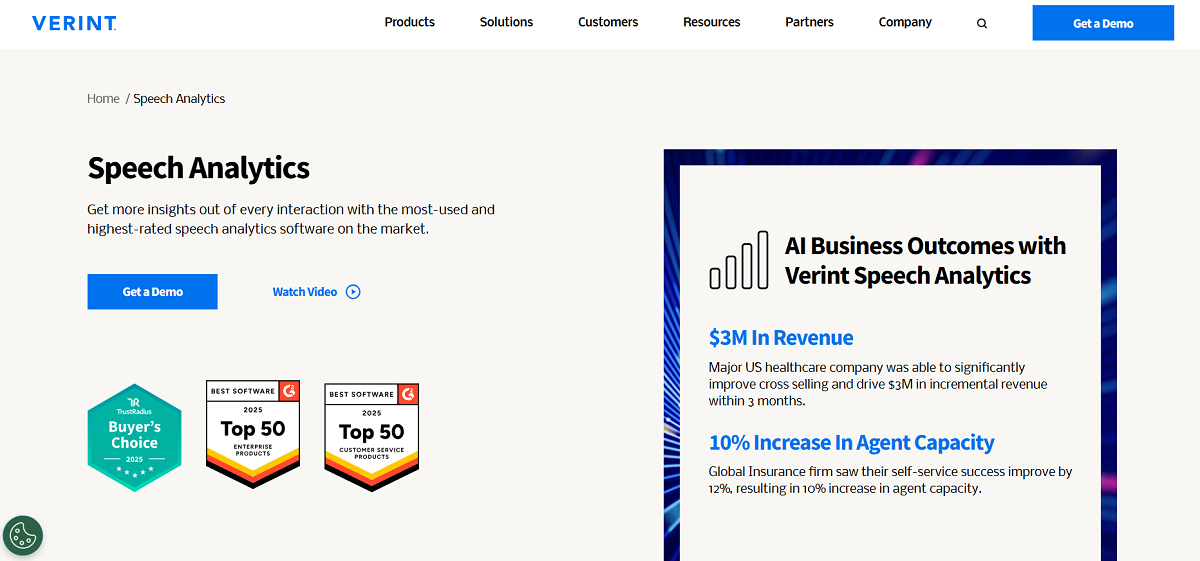
Verint is one of the largest deployed voice analytics platforms for the enterprise contact center. Verint's Speech Analytics solution, which is part of its Verint Open Platform, automatically transcribes and analyzes customer interactions from both voice and digital channels helping contact center teams identify trends, manage agent performance, and handle compliance at scale.
Built on Verint's Da Vinci AI engine, Verint's platform analyzes 100% of customer calls without sampling to deliver transcriptions, sentiment scoring, topic categorization and root cause analysis.
Key Features
Speech and Interaction Analytics: Verint automatically transcribes 100% of customer calls with its AI-driven Exact Transcription Bot, then analyzes speech transcripts for keywords, topics, sentiment, and root cause trends. Managers can see exactly why customers are calling, how agents are engaging, and where risk or service trends are happening throughout the contact center.
Automated Quality Monitoring: Verint automates scoring and quality management of interactions against predefined topics, keywords, and compliance standards. Supervisors can review scored calls, detect coaching opportunities, and measure agent performance against quality standards without manual sampling.
Sentiment and CX Analytics: Verint’s Sentiment Bot automatically scores every conversation, providing contact center leaders with real-time insight into customer experience trends. Agents and teams can leverage sentiment scores to uncover service gaps, identify at-risk customers, and pinpoint agents that may require further coaching.
Omnichannel Interaction Analytics: Analyzes unstructured, text-based information from connected chat, email, and messaging channels. Based on keywords, this gives teams visibility into customer sentiment and behavior across channels.
Analytics Marketplace: Call centers can access Verint’s online marketplace of pre-configured reports, categories, and analytics upgrades, enabling teams to roll out new capabilities without having to wait for custom development.
AI Automation Bots: From natural language data querying with Genie Bot to automatically generating call summaries with Playback Summary Bot and redacting sensitive data with PII Redaction Bot, Verint AI automation bots eliminate tedious tasks that typically require hours of analysts' time, allowing teams to focus on insight.
Pros
- Enterprise-class call recording with high-volume speech analytics based on transcriptions
- Machine scoring and natural language call summary minimize the need for manual analyst review
- Cross-channel monitoring to link call analytics with digital channel messaging
- AI bots make quality and compliance scoring and reporting more efficient
- Widely deployed by enterprise contact centers
Cons
- Voice analytics is based on transcription and keyword spotting vs. analyzing acoustic and behavioral signals from within the audio
- Complex platform takes longer to implement and requires ongoing configuration
- Many advanced analytics capabilities require training before teams can fully leverage them
- Pricing is geared towards large enterprises
Observe.ai
Overview
Observe.AI is a conversation intelligence platform designed for contact centers. It automatically transcribes and analyzes voice conversations using NLP and AI, surfacing insights about customer sentiment, agent performance, compliance risk and service trends across every call. Observe.AI analyzes 100% of conversations, rather than relying on manual sampling, to give contact center leaders real-time visibility across their entire call volume, without requiring supervisors to listen to call recordings. Teams leverage these voice analytics insights to coach agents, identify compliance gaps, and see what's driving customer contacts at scale.
Key Features
Speech Transcription and Conversation Intelligence: Observe.AI transcribes 100% of customer calls and uses NLP to identify keywords, intent, frequently occurring topics, and sentiment patterns.
Automated Quality Assurance: Instead of manually reviewing a subset of calls, Observe.AI automatically scores every call against established quality benchmarks.
Real-Time Agent Guidance: Observe.ai listens to customer interactions and delivers in-ear guidance to agents with recommendations based on sentiment, keywords, and conversation context.
Agent Coaching & Performance Insights: Supervisors get AI-powered coaching recommendations based on insights derived from agent interactions over time.
Compliance and Risk Detection: Observe.AI detects conversations that could potentially include policy breaches, omitted disclosures and compliance language through the use of keywords paired with out-of-the-box or custom templates. All flagged conversations are recorded, providing compliance teams with an auditable trail of risk across your entire call volume.
Omnichannel Conversation Monitoring: Observe.AI records chat, email and SMS conversations as well, helping contact centers see a complete picture of customer and agent behavior across both voice and text-based channels.
Pros
- Automatically transcribes 100% of your voice interactions, no manual sampling needed
- Real-time guidance helps agents handle calls and prevent escalations during the call
- AI-powered coaching insights help managers coach agents using real call performance
- Pinpoint potential compliance risks across your entire call volume
- Analyze trends in customer intent and service quality across thousands of interactions
- Analyzes both voice and digital channels in a single platform
Cons
- Voice analytics capabilities rely on transcription and NLP more than acoustic or behavior modeling of the audio
- Onboarding and integration can be slow in large contact center deployments
- Analytics platforms have complexity that requires ramp-up before teams can realize value
- Pricing targets mid to large enterprises
CallMiner
Overview
CallMiner gives teams insight into customer interactions across channels with its conversation analytics solution. CallMiner’s platform, CallMiner Eureka, automatically captures and analyzes voice and digital conversations to gauge sentiment, detect anger, classify calls with AI, and benchmark interactions against defined quality checklists. CallMiner converts recorded calls into searchable, structured data that teams can analyze to track agent performance, identify CX trends and manage compliance risks across their full conversation volume, without manual call reviews or sampling.
Key Features
Speech & Conversation Analytics: CallMiner automatically transcribes customer calls and analyzes conversational data for language, sentiment, key words and phrases as well as topics that occur frequently in calls. Organizations leverage these insights to know what topics customers are calling about, how agents are handling those calls and where gaps in service exist throughout the contact center.
Multi-Modal Sentiment Detection: In addition to language-based analytics, CallMiner uses limited acoustic AI models to flag customer sentiment and emotional triggers during calls. CallMiner identifies conversational indicators of anger/frustration and other signals to provide supervisors greater insight than simple keyword detection.
Automatic Interaction Scoring: Automatically score every call against specified keyphrase-driven quality metrics, allowing supervisors to identify struggling agents and measure teams against objective quality standards.
Real-Time Alerts: CallMiner scores conversations in real time and alerts supervisors when risky calls are occurring, enabling teams to intervene before a call deteriorates or a compliance issue goes unaddressed.
Keyword Analysis & Trend Detection: CallMiner automatically analyzes conversations across your entire call portfolio to surface keywords and phrases related to common customer issues, trending topics and operational challenges.
Omnichannel Conversation Intelligence: In addition to voice, CallMiner records and analyzes interactions across chat, email, and social media to provide a holistic view of customer experience.
Conversation Intelligence Dashboards: Leadership teams can see trends in call sentiment, agent metrics, compliance risk and customer topics on customizable dashboards.
Pros
- Eliminates manual sampling by scoring and categorizing 100% of voice interactions
- Considers acoustic tone in addition to textual analysis for sentiment scoring
- Flags problematic calls as they happen, so supervisors can prevent compliance or sentiment issues in real-time
- Identifies keywords and trends to uncover root cause of common customer complaints
- Operations leaders can easily monitor contact center health with customizable dashboards
- Prebuilt library of customizable workflows
Cons
- Voice analytics capabilities rely primarily on transcript and keyword analysis (acoustic signal analysis is limited compared to purpose-built voice intelligence platforms)
- UI and analytics tools require some learning which may inhibit early adoption
- Setup and configuration can be complex and time-consuming, requiring significant effort before teams can extract full value
- Pricing is geared towards mid-size and enterprise companies
Genesys
Overview
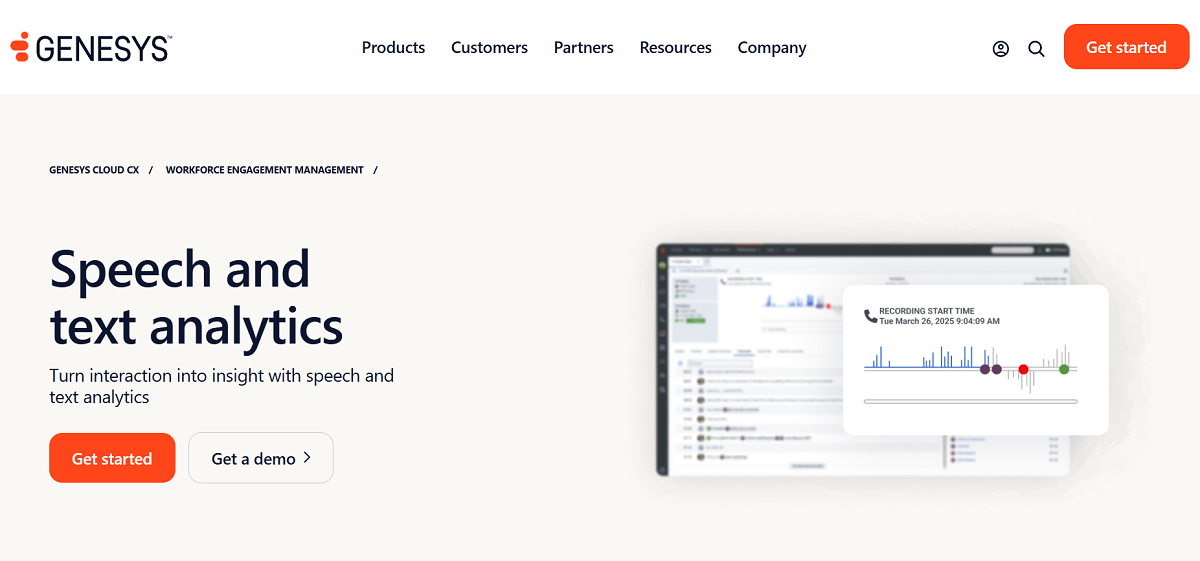
Genesys powers one of the most installed contact center platforms among enterprises worldwide. Genesys delivers AI-powered voice and text analytics as native capabilities in its Genesys Cloud CX platform, which contact centers also rely on for routing, workforce optimization, and quality management. These native capabilities allow voice analytics insights generated from every customer interaction, whether on voice or digital channels, to flow directly into QA workflows, coaching initiatives and operational reporting without the need to transfer data from one system to the next.
Key Features
Voice Transcription & Interaction Analysis: Genesys Cloud automatically transcribes 100% of voice interactions with native AI. All transcripts are indexed for sentiment, topics, and keywords.
Sentiment Analysis: Native AI analyzes customer sentiment across voice and digital interactions. Supervisors can search and segment interactions by sentiment trend so they can quickly pinpoint calls and service patterns that have the biggest impact on customer experience and CSAT scores.
Agent Empathy Analysis: Genesys analyzes text sentiment and detects keywords associated with empathetic language to flag potential coaching opportunities and inform agent performance reviews.
Topic Spotting & Interaction Categories: Genesys uses AI to detect new topics and identify commonly occurring topics across voice and digital interactions. Teams use these insights to identify root cause for call surges and catch trends before they become larger issues.
Supervisor Copilot: Genesys creates AI-powered summaries for supervisors with key takeaways such as drivers of sentiment change and real-time language translation, helping supervisors spend less time manually reviewing calls.
Automated QA Analysis: Genesys populates quality scores with AI-powered recommendations based on interaction events. Supervisors can accept and verify changes instead of rebuilding each score from scratch, allowing quality teams to review exponentially more interactions.
Omnichannel Conversation Analytics: Genesys records and analyzes voice, chat, email and messaging conversations all in one place, delivering a single view into customer sentiment and agent behavior across channels.
Pros
- Voice and text analytics are built into Genesys Cloud CX, a broader CX platform
- Automatically transcribes and analyzes 100% of voice conversations in 70+ languages
- Empathy analysis measures how well agents engage with customers
- AI generates insight-driven QA evaluation forms to reduce the manual burden for supervisors
- Topic spotting and trend analysis surfaces root causes behind recurring customer issues
- Unified omnichannel analytics delivers voice analytics with text analytics in the same platform
Cons
- Voice analytics is built-in to the Genesys Cloud CX platform, so organizations using another CCaaS vendor cannot independently utilize voice analytics
- Analysis is based on transcription, NLP, and keyword spotting vs. audio/acoustic or agent behavioral analysis
- Large and robust platform can be time-consuming to implement
- Pricing is geared towards mid to large-size enterprises
NiCE CXone
Overview
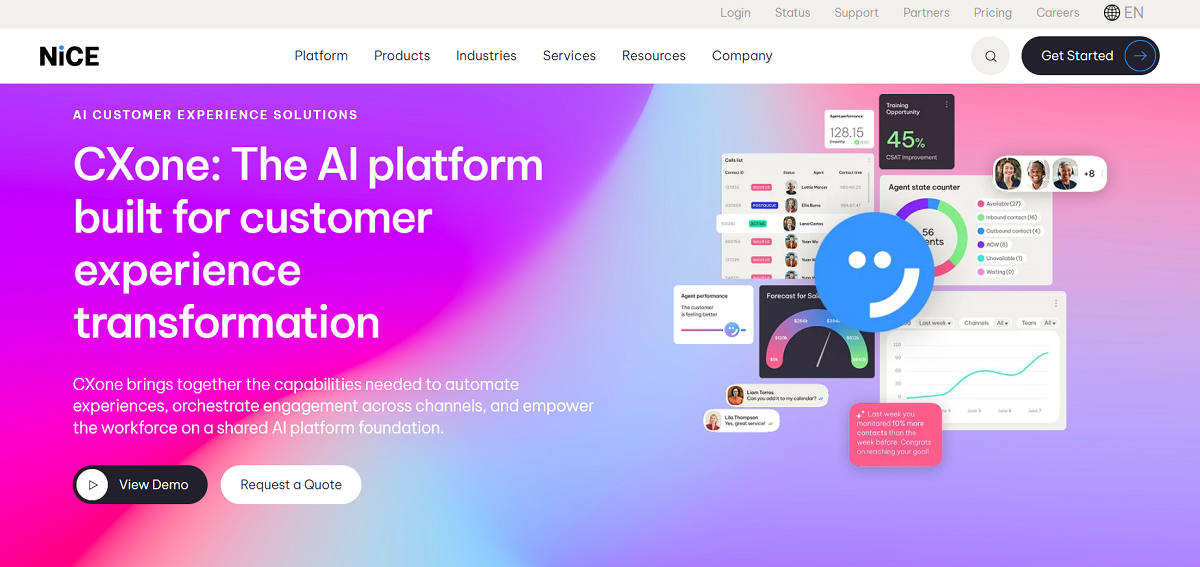
NiCE provides cloud contact center software and analytics solutions through its CXone platform, which unifies speech analytics, call routing, workforce management and AI-driven interaction analytics. NiCE helps contact center leaders understand voice and digital interactions at scale by transcribing calls, detecting sentiment and keywords, and flagging compliance risks across all conversations. Voice analytics capabilities enable managers to see what’s happening across their call queues without having to listen to calls. Teams can create custom workflows that highlight coaching opportunities, trigger compliance warnings and detect service trends based on patterns across thousands of interactions.
Key Features
Speech and Interaction Analytics: By transcribing calls and using AI to detect sentiment, extract key phrases, and identify common topics and customer pain points, NiCE helps supervisors and operations leaders understand why customers are contacting them, how agents are handling calls, and where service can be improved on 100% of calls.
Real-Time Call Monitoring: NiCE can monitor calls as they happen, sending instant alerts when a conversation includes predefined escalation keywords, risky language, or negative sentiment indicators. Supervisors can act (e.g., by entering the call, coaching the agent, or escalating the interaction for follow-up) without having to wait for a post-call analysis.
Custom Coaching & Analytics Workflows: Organizations can create workflows based on a combination of topics, sentiment scores, and/or certain keywords or phrases captured during voice conversations. If a call is flagged based on that logic, the NiCE platform can automatically create coaching opportunities, flag calls for follow-up, or surface them in trend reporting.
Omnichannel Interaction Analytics: With NiCE, customer interactions across voice, chat, email, and social media are captured and analyzed in a single platform. This allows contact center leaders to see sentiment and behavior trends across all channels, enabling teams to better manage a seamless customer experience across the entire contact center.
Predictive Behavioral Routing: NiCE routes incoming calls based on behavior data and interaction history to the agent best equipped to handle that customer and conversation. By predicting which agent is best suited to speak with a caller based on previous interactions, NiCE aims to increase first contact resolution and prevent escalations before they happen.
Workforce Optimization: NiCE integrates quality monitoring, scheduling and performance management into one platform. Voice analytics automatically feed into workforce optimization processes so supervisors have the information they need to coach agents, allocate staffing and measure performance against quality goals.
Pros
- Transcribes and analyzes 100% of voice conversations with AI-powered speech-to-text and sentiment analysis
- Real-time notifications enable managers to intervene on high-risk or escalating calls immediately
- Built-in analytics workflows highlight coaching and compliance issues without delay
- Cross-channel monitoring integrates voice intelligence with digital channel data for a holistic view
- Behavioral prediction routes calls more effectively by learning from past interactions
- Ideal for high-volume contact centers and large enterprises
Cons
- Voice analysis is based on transcription & keyword spotting, not acoustics/behavioral cues from audio
- Complex platform can be time-consuming to implement and configure
- Many advanced analytics features require training before teams can fully utilize them
- Pricing is geared towards larger enterprises
Enthu.AI
Overview
Enthu.AI is a contact center conversation intelligence platform for reviewing and analyzing voice interactions at scale without the implementation and cost barriers associated with large enterprise speech analytics tools. Enthu.AI automatically transcribes customer calls, scores conversations with generative AI, detects sentiment, flags compliance language, summarizes calls and more. The platform is powered by modular AI agents. Each agent is specialized in performing one set of functions, such as transcription, QA scoring, compliance monitoring, CSAT prediction, and reporting. This enables contact centers to choose the functionality they need rather than replace their entire platform.
Key Features
Automatic Transcription and Call Summaries: Enthu.AI automatically transcribes every customer call with speaker identification and time stamping. The platform also creates call summaries highlighting key discussion points, outcomes, and next steps following an interaction, reducing the time spent on post-call wrap-up tasks.
Automatic QA with Generative AI: Enthu.AI’s QA Agent automatically scores 100% of voice calls against configurable scoring criteria for empathy, script adherence, compliance, and service quality. Supervisors get AI-powered scores on every call and can provide precise feedback by accepting, modifying, and annotating directly in the platform.
Sentiment Analysis: Enthu.AI measures customer sentiment throughout voice calls and understands how customers feel during calls as well as how sentiment changes across agents, teams and over time. Leaders in contact centers can pinpoint exactly what types of calls and agent behaviors are causing the most friction and where coaching dollars will improve customer experience the most.
Compliance Agent: Enthu.AI's Compliance Agent listens for specific required scripts, regulatory disclosures and policy language. Interactions that don't fall within set compliance guidelines are automatically flagged for review, allowing compliance teams to have an auditable view across all calls without manual spot checking.
Agent Coaching and Call Library: Enthu.AI's call library enables supervisors to create playlists of recorded interactions that can be used for agent self-coaching or team training. Patterns in agent performance identified by AI are surfaced directly into coaching workflows so supervisors can provide agents with specific feedback backed with data, instead of vague suggestions.
Reporting Agent and Analytics: Trends in call quality, sentiment, compliance and agent performance are surfaced by Enthu.AI's Reporting Agent through customizable dashboards. Contact center ops leaders gain visibility into key metrics and opportunities for improvement without relying on manual analyst review cycles.
Pros
- Faster deployment compared to traditional voice analytics platforms
- Analyzes 100% of conversations with generative AI, without manual sampling
- AI agent architecture allows organizations to activate only the capabilities their teams need
- AI-powered call summary reduces post-call admin time for agents and supervisors
- 100% coverage ensures compliance monitoring is applied to every call, with automatic flagging and audit trails for easy reporting
- Well-suited for small to mid-size businesses
Cons
- Voice analytics depends on transcription and NLP vs. acoustic/behavioral audio data
- Depth of platform could fall short for largest enterprise contact centers with highly sophisticated layered analytics
- Omnichannel coverage outside of voice is more limited compared to larger conversation analytics platforms
- Limited in-call intervention options at the time of writing (listed as “coming soon”) compared to more mature platforms
Xdroid Voice Analytics
Overview
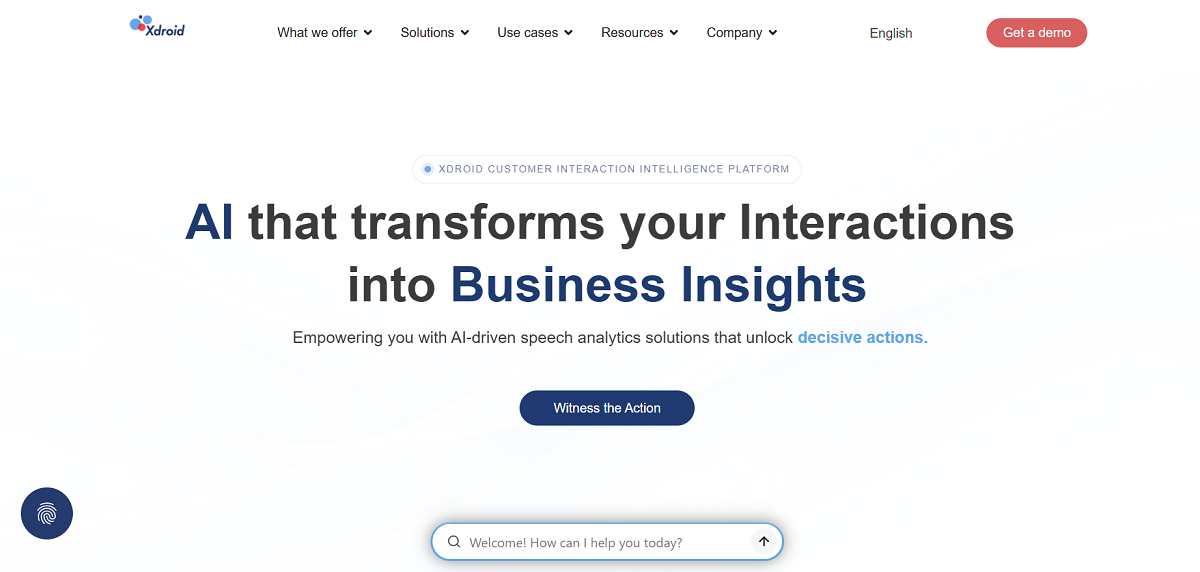
Xdroid is a speech analytics platform designed for contact centers seeking to mine actionable insights from their voice recordings. Xdroid’s VoiceAnalytics solution analyzes 100% of recorded customer calls for sentiment, speech style, productivity signals, keyword spotting, compliance/adherence, and escalation patterns. The software can be run in the cloud or on-premise, supports over 25 languages via Xdroid’s native speech recognition engine as well as third party vendors and powers AI capabilities with Xdroid IQ, the company’s in-house developed LLM.
Key Features
Speech to Text Transcription and Keyword Search: Xdroid creates and maintains its own speech recognition engine, allowing transcription and keyword search functionality in over 25 languages. Xdroid also integrates with third party transcription engines to cover additional languages worldwide, allowing contact centers serving multiple countries to choose how they would like their recordings to be transcribed and searched.
Automatic Quality Metrics: VoiceAnalytics analyzes 100% of calls and automatically pre-filters calls that need to be reviewed, presenting conversations most likely to have quality, compliance or escalation events without forcing supervisors to review every call. It can also automatically push individual performance scores to agent scorecards.
Xdroid IQ (Proprietary LLM): Xdroid’s proprietary large language model can be used on-premise or in the environment of choice for those businesses that need to maintain complete data sovereignty. It supports GDPR compliant, secure integrations and allows businesses to leverage Retrieval Augmented Generation (RAG) to provide their teams context from their own internal documents, procedures and knowledge base to enhance AI created scorecards and quality insights.
Escalation Tracking and Call Categorization: VoiceAnalytics allows you to track escalations over time. It tracks and categorizes the reasons for escalation at the agent, team and contact center level. Calls can also be categorized by detected keywords, phrases and expressions, allowing operations leaders to see why customers are calling and how that changes over time.
Compliance & Automated Data Redaction: VoiceAnalytics also monitors calls for greetings, scripts and compliance with company regulations. Automated data redaction technology searches recordings for GDPR-sensitive and personally identifiable data points and automatically redacts them from recordings.
Predictive Analytics & CRM Integration: VoiceAnalytics merges voice analytics with CRM meta data and call outcome data to allow for predictive analysis of customer behavior. Contact centers can track conversations across time by case id and customer id to measure first call resolution and recreate the entire customer journey across multiple touchpoints.
Pros
- Proprietary speech recognition engine supports 25+ languages and third-party integrations for worldwide language coverage
- Deploy on-premise or in the cloud to retain control over where sensitive voice data is processed
- Contextualizes AI insights with in-house company knowledge bases and documentation using Xdroid IQ’s RAG feature
- Automatically identifies and filters the calls most likely to have quality issues to reduce manual review
- GDPR-compliant automated data redaction redacts PII and other sensitive data from recordings
Cons
- Smaller presence in North America compared to larger enterprise-focused voice analytics vendors
- Real-time agent assist is a separate product (AgentAssist) and not included with VoiceAnalytics out of the box
- May be too limited for organizations with omnichannel analytics needs
C360 (formerly Call360)
Overview
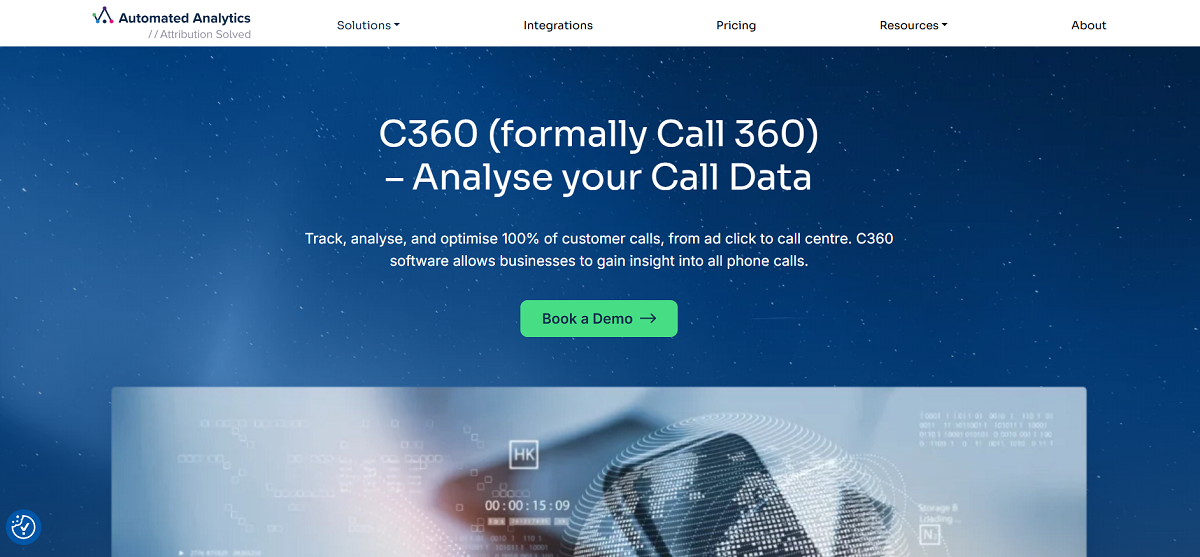
C360, previously known as Call360, is Automated Analytics' artificial intelligence-powered voice analytics and call tracking platform. The platform allows organizations to track the customer journey from the very first digital touchpoint to phone interactions. C360 automatically categorizes the intent, sentiment, and outcome of each interaction, allowing contact center teams to understand customer behavior at scale. Acting as middleware that integrates above existing phone systems, C360 works with virtually any telephony infrastructure in the market, so teams don’t need to replace their current setup.
Key Features
AI-Powered Call Analytics & Intent Detection: With C360 automatically classifying the intent, sentiment and resolution of every call, contact center teams can know at scale why customers are calling and how those calls are resolving without manual sampling or reviewing individual call recordings. Supervisors can surface patterns in customer behavior, identify trends in recurring call drivers, and pinpoint friction points that lead to unnecessary calls.
Call Recording, Transcription & Categorization: C360 records, transcribes and categorizes every inbound and outbound call with customers, scores each interaction against a customizable compliance policy and flags calls that need review.
Sentiment Analysis: C360’s AI analyzes transcripts for caller intent, sentiment, and outcomes on every recorded call. Contact center leaders gain uninterrupted insights into how callers are feeling throughout calls and how sentiment changes across teams, timeframes, and types of calls without manual call review.
Compliance Monitoring: C360 automatically reviews 100% of calls against customizable compliance standards, helping compliance teams stay proactive by surfacing issues and training deficiencies before they become problems. C360 also produces an auditable log of agents’ compliance with company policies and mandatory disclosures.
Attribution + CRM Integrations: C360 connects phone call data to digital campaign performance across Google Ads, Google Analytics, Meta, and other platforms. With native integrations with Salesforce, HubSpot, Microsoft Dynamics, and other CRMs (100+ in all), teams can correlate voice analytics to understand the complete customer journey from digital touchpoint to call resolution.
Real-Time Insights Dashboard: Administrators have a real time insights dashboard that allows them to see data and performance on calls by location, team and more. Operations leaders gain instant visibility into volume, sentiment trends, compliance status, and conversion rates, reducing reliance on manual reports.
Pros
- Analyzes 100% of calls without requiring supervisors to listen to individual recordings
- Automatically scores call intent, sentiment and resolution on every call, eliminating the need for random sampling
- Links voice analytics insights to digital campaign attribution and CRM data so teams can see the full customer journey from digital touchpoint to call resolution
- GDPR-ready and TCPA-compliant platform with secure call storage is ideal for regulated industries
- Deploys as middleware on top of existing telephony systems, so teams don’t have to replace their existing systems
- Extensive CRM integration library with integrations for 100+ platforms
Cons
- Voice analytics tools are built on transcription and NLP-based analysis, not acoustic or behavior analysis of the audio
- Marketing attribution and contact center reporting may be more than necessary for teams looking for voice intelligence and QA tools
- Real-time agent guidance and in-call intervention capabilities are not a core focus
- Launched in the U.S. in 2025, so it’s less established in the U.S. compared to larger enterprise voice analytics vendors
Level AI
Overview
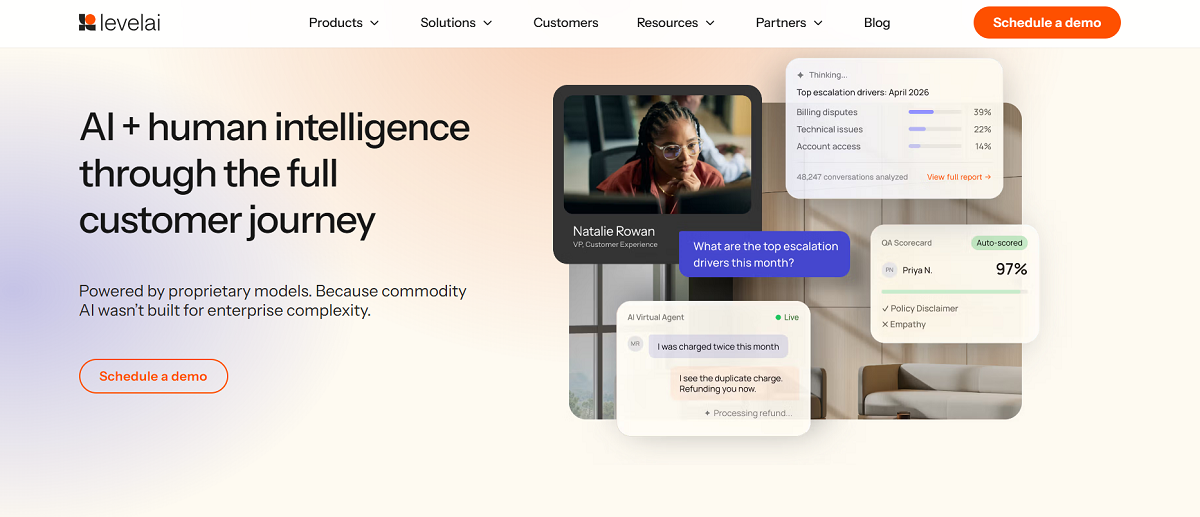
Level AI is a conversation intelligence platform designed for contact centers that must understand voice at scale and capture every call as structured, actionable data. Level AI’s natural language understanding and generative AI automatically transcribes customer calls, detects intent and sentiment, assesses agent performance, and surfaces operational trends from every interaction, without relying on supervisors listening to calls or sampling a subset of conversation volume. The platform helps teams automate quality assurance, eliminate post-call administrative tasks, and understand the trends driving customer contacts.
Key Features
Speech Transcription & Conversation Intelligence: Level AI automatically transcribes 100% of customer calls and uses natural language understanding to identify intent, sentiment, key topics and conversation outcomes on every call.
Automated QA: Instead of manually reviewing a sample of calls, Level AI monitors every conversation, automatically scoring calls against customizable quality metrics for compliance, service and agent behavior.
Real-Time Agent Assistance: Level AI listens in on calls with agents and provides knowledge base articles, recommended responses, and next-best-actions in real-time, as the conversation is happening. If a call is going down a negative path, agents are given contextual, in-the-moment guidance to decrease handle time, reduce errors and increase first-call resolution, without manual supervisor intervention.
Intent Detection: Level AI identifies why customers are reaching out to support and follows the conversation as the issues develop and get resolved. These intent signals provide ops leaders with organized visibility into the root cause of call volume and escalations.
Conversation Tagging & AI Summaries: Level AI tags and categorizes calls, creates AI call summaries, and automatically populates post-call disposition so agents spend less time on administrative tasks following each call.
Dashboards & Reporting: Supervisors and ops leaders keep track of sentiment trends, agent performance, compliance, and driver data with customizable dashboards.
Pros
- Analyzes 100% of voice conversations, eliminating the need for random sampling
- Provides real-time agent coaching during live calls to reduce handle time and improve resolution
- AI-powered call summaries and automatic tagging reduce the post-call administrative burden for agents
- Identifies the reasons why customers call to provide insight into what’s driving call volume and repeat calls
- Automates QA scoring, so teams can hold agents to objective quality standards
- Works with both voice and digital channels
- Works with your current tech stack, no platform replacement necessary
Cons
- Voice analytics is based on transcription and NLP vs. audio acoustic/behavioral signals
- Platform takes time to configure and team training before analytics can be fully operationalized
- Pricing is not publicly listed, so teams need to engage Level AI directly to evaluate cost and fit
- Some advanced features may exceed the needs of smaller teams
Best Voice Analytics Software Comparison Chart
What is Voice Analytics Software?
Voice analytics software analyzes recorded or live customer calls to surface insights about what’s happening within those conversations. Instead of supervisors sampling calls, voice analytics solutions can process tens of thousands of interactions and identify trends in customer sentiment, agent actions, call resolution, and service trends that would otherwise go unnoticed.
Businesses deploy voice analytics technology to automate QA, coach agents more effectively, monitor compliance, detect fraud, and identify what’s driving customer contacts at scale. Instead of reviewing a subset of calls retrospectively, teams have continuous visibility into all interactions and can act in real-time if a call enters dangerous territory.
How Voice Analytics Software Works
In its simplest form, voice analytics software transcribes calls and looks for keywords and phrases. More sophisticated systems analyze additional aspects of the conversation, such as tone, emotion, speech cadence, and acoustic and behavioral signals, to provide insight into how the conversation is developing beyond just the words being spoken. The most advanced solutions use voice analytics to analyze audio itself, pinpointing indicators of stress, urgency, frustration, deceit and more that transcript-based solutions can’t recognize.
Advancements in AI have transformed voice analytics from an after-the-call reporting mechanism into real-time intelligence that works alongside every customer interaction. Leading voice analytics platforms tell you why something was said, how the customer was feeling, and what action your team should take in response.
Voice Analytics vs. Speech Analytics vs. Conversation Intelligence
Speech, voice, and conversation intelligence are three frequently-used terms that actually mean quite different things. Confusing the capabilities offered by these tools can lead contact center leaders astray as they evaluate platforms and choose solutions that don’t actually fit their requirements.
- Speech Analytics is the broadest and oldest of the three terms, generally referring to platforms that transcribe recorded calls and run analytics against that text transcript. Speech analytics is firmly rooted in language: which words were used, how frequently, and in what context.
- Voice Analytics platforms take the analysis a step further by not only considering language but also analyzing the audio signal itself. By analyzing how something is said in addition to what was said, voice analytics tools can surface insights that transcripts simply can’t, particularly around the emotions a customer or agent is experiencing during a conversation. Fraud detection, deepfake voice scams, and agent stress are just a few capabilities that require voice analytics, rather than simple speech analytics.
- Conversation Intelligence is an even broader category that includes both speech analytics and voice analytics, but typically extends all the way through to downstream business workflows. Conversation intelligence tools use speech/voice analytics to automate QA, trigger coaching workflows, guide agents in real-time, and more.
These terms are often used loosely (if not interchangeably) in vendors’ marketing materials. When comparing platforms, look beyond these labels and focus on the specific capabilities being offered. Does the platform analyze the audio stream directly, or is it working from a transcript? That question will tell you more about what a solution is (and isn’t) capable of than any product category name.
How To Choose the Best Voice Analytics Software
Dozens of voice analytics platforms are vying for your contact center budget. But before you even look at vendors, you need to understand your needs. Here are the key factors to consider.
Real-Time vs. Post Call Needs Assessment
If real-time event response is critical for your operations, make sure the solution you're considering actually offers live (low-latency) monitoring and doesn't just market their "real-time" monitoring as what-most-platforms-call real-time, post-call processing.
Transcript Only vs. Acoustic AI
This is by far the most important technology differentiator in the voice analytics space. Solutions that operate only on transcripts analyze the words that were spoken. True acoustic AI platforms "listen" to the audio itself and analyze tone, pitch, speech rate, cadence, silence, emotional response, and more using acoustic fingerprints pulled straight from the audio stream.
Traditional transcript-based keyword spotting is insufficient if you need to detect customer emotion, fraud indicators, agent stress, or AI-generated deepfake voices. A true acoustic AI platform is necessary for these use cases.
Integration with Your Existing Tech Stack
Voice analytics software will have to integrate with the tech your business already operates, such as your telephony system, CCaaS platform, CRM, QA workflows, etc. When considering vendors, make sure you understand your current stack and double check the platform will integrate natively or via APIs without making you switch out tools that are already working for your team.
Cloud vs. On-Premise Deployment
Consider whether the platform is cloud-based, on-premise, or hybrid, and how that will impact your organization’s ability to meet its data governance needs. Cloud platforms tend to have faster implementation time and scalability. On-premise or private cloud options should be considered by organizations in highly regulated industries or geographic locations with data sovereignty concerns that prevent sending audio to a third-party cloud environment.
Regulatory Compliance Requirements
Businesses operating in heavily regulated industries, such as financial services, healthcare, insurance, and utilities, must have the ability to monitor compliance. Ensure your platform can automatically redact sensitive information and PII, highlight missing disclosures, highlight use of non-compliant language, and provide a complete audit trail throughout all recorded interactions.
AI Explainability
When AI-generated QA scores and compliance flags become operationally significant, how the system arrived at that conclusion becomes important. Look for platforms that allow you to drill-down findings to a particular moment in the conversation, offer auditable scoring rationale and provide supervisors with enough transparency to have confidence in, and act upon, AI-generated insights instead of viewing them as a black box.
Scalability
If a platform performs adequately with a few thousand calls per month, it could disappoint when you're handling hundreds of thousands of calls. Make sure the vendor has tested performance at your contact center's current scale and projected scale for the next 2-3 years. Ask direct questions about latency, processing speed, and accuracy when call volumes are high, don't settle for vague assurances about scalability.
Pricing Structure
Voice analytics licensing ranges from per-minute/per-seat pricing models to platform fees based on tiers of usage. It's important to understand total cost of ownership including implementation, integration, training and support costs versus just the license fee advertised. While some platforms publish pricing upfront, many enterprise vendors will not provide pricing until you've engaged fully in the sales process.
Ease of Implementation
Inquire about typical implementation timelines, how much configuration is needed before the platform can surface actionable insights, and how much ongoing tuning and maintenance your team will be responsible for. Some platforms demand weeks of category-building and tuning to produce reliable results. Others learn from massive datasets ahead of time, providing you with accurate insights on day one.
Frequently Asked Questions
Can voice analytics work in noisy environments?
Yes, but performance degrades without proper noise handling. Some platforms incorporate noise suppression, speaker separation, acoustic modeling, and AI-based signal enhancement to minimize background noise and help extract speech patterns from the audio. That said, severely distorted audio files with multiple speakers or substantial interference can impact both transcription and behavioral analytics.
How does accent or dialect affect voice analytics accuracy?
Accents or dialects can cause transcription and analytics errors if your platform was primarily trained on narrow language data. Today's AI voice analytics platforms increase accuracy with large multi-language speech models, acoustic analysis, contextual understanding, and continuous model training with diverse speakers. Custom vocabulary tuning is also available with some platforms to specifically adapt your model to regional speech patterns, industry vocabulary, and multilingual usage.
Can voice analytics detect customer sentiment?
Some advanced voice analytics models measure acoustic features (pitch, tempo, energy, voice quality, etc.) to analyze sentiment and can determine if someone is frustrated, satisfied, hesitant, or excited as it occurs. For example, someone can say, “Fine,” yet they may actually be angry or frustrated.
Can voice analytics detect fraud or deepfakes?
Some voice analytics solutions can detect both. For fraud detection, voiceprint biometrics technology matches a caller’s unique vocal traits to a stored voiceprint profile to identify imposters. Regarding deepfakes, technology like liveness detection and artifact analysis look for unnatural spectral characteristics, micro-pause cadences and synthesis artifacts that most synthetic voices leave behind.
Does voice analytics require transcription?
Audio analysis tools can operate directly on the audio file itself. These tools analyze tone and emphasis without ever transcribing speech to text. However, most users don’t just want to know how something was said. They want to know what was said, too. That’s where transcription comes in. With transcription, you can search calls, pull quotes, or see the words behind the tone.
The question isn’t whether you need transcription, but how deeply you want to understand your data. Transcription combined with audio analysis will tell you more than either will alone, but each layer comes at added cost. Many high-end solutions use a mix of transcript-based and voice-native analytics for this reason, but whether that level of intelligence is worth it for you depends on your budget and your needs.