What Is a Call Center? Types, Metrics and How They Work
10 AI Monitoring Templates for Smarter AI Oversight
September 25, 2026

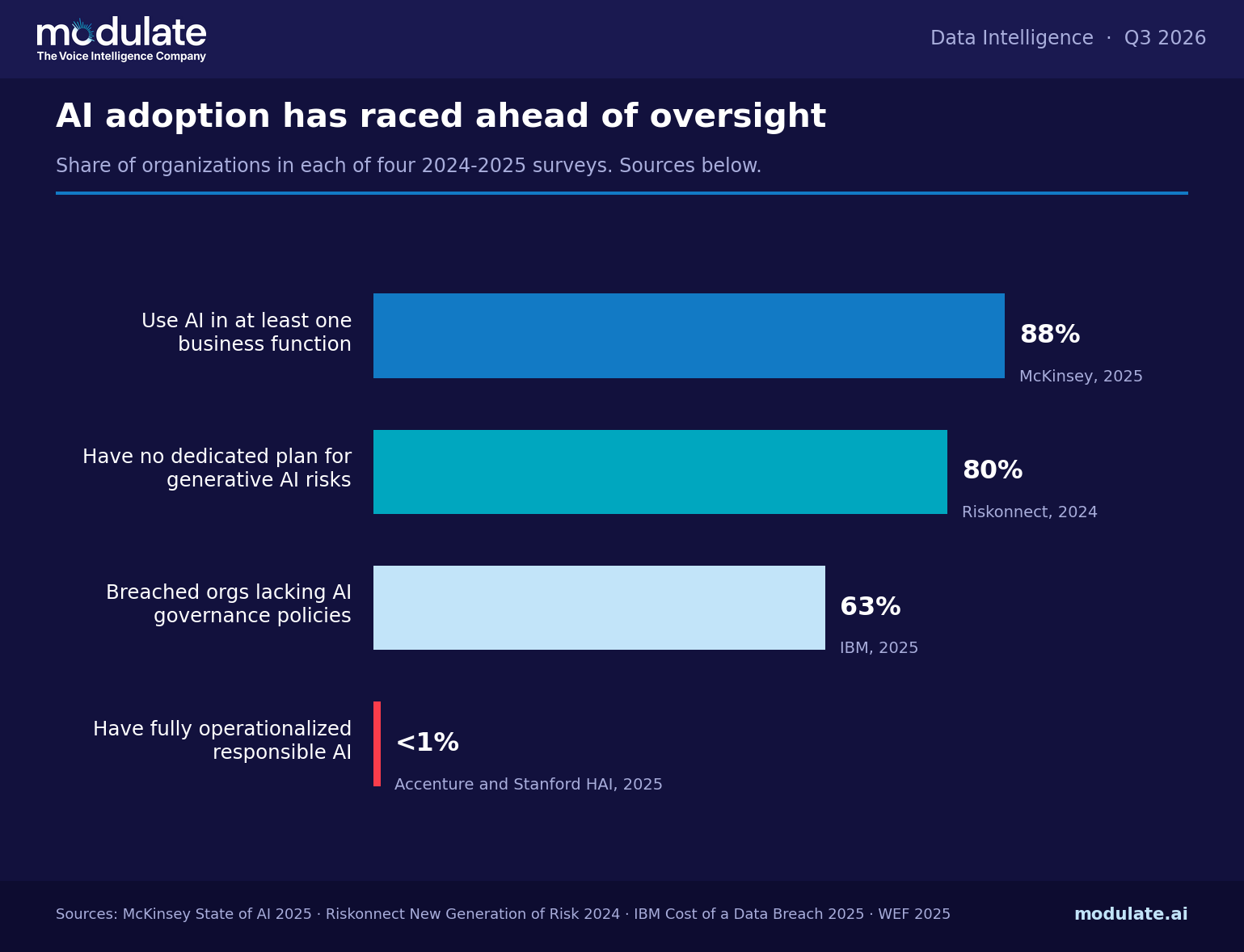
An AI monitoring template is the fastest way to put structure around the AI tools your company already uses. 88% of organizations now use AI in at least one business function, according to McKinsey’s 2025 State of AI survey, yet fewer than 1% have fully operationalized responsible AI, per Accenture and Stanford HAI research cited by the World Economic Forum.
Adoption keeps accelerating. Stanford’s 2026 AI Index writes that "Generative AI reached 53% population adoption within three years, faster than the PC or the internet, though the pace varies by country and correlates strongly with GDP per capita." Governance has not kept up. Building an AI monitoring program from scratch takes time most teams don’t have.
Whether you need a lightweight dashboard to monitor usage or an audit-ready checklist, the right template saves you weeks. Here are 10 free AI monitoring templates to help your AI rollouts run smoothly.
What Is an AI Monitoring Template?
An AI monitoring template is a structured document or dashboard that tracks how your AI systems perform, what they cost and what risks they create. Every strong template covers six components: performance metrics, risk identification, owner assignment, audit logs, cost tracking and scheduled reviews. The best ones add governance workflows and alert triggers so problems get escalated, not just logged. Templates range from simple Notion trackers to government-grade frameworks aligned with the EU AI Act, NIST AI RMF and OECD principles. For the fundamentals of what to watch once a template is in place, see our guide to AI monitoring.
The author of the NIST AI Risk Management Framework, which most of these templates borrow from, has been blunt about why monitoring cannot stop at accuracy dashboards. As Elham Tabassi told the U.S. House Science Committee:
"A significant challenge in the evaluation of trustworthy AI systems is that context (the specific use case) matters; accuracy measures alone will not provide enough information to determine if deploying a system is warranted. The accuracy measures must be balanced by the associated risks or societal harms that could occur."
- Elham Tabassi, Associate Director for Emerging Technologies, NIST. House Science Committee testimony, October 2023. Source
That is why every template on this list pairs performance metrics with risk, owner and context fields instead of accuracy alone.
The Business Case for AI Monitoring
The risks of under-monitored AI are significant. In EY’s 2025 Responsible AI Pulse survey of 975 C-suite leaders at companies with over US$1 billion in revenue, 99% reported financial losses from AI-related risks, averaging US$4.4 million per company and an estimated US$4.3 billion across all respondents. Regulators are raising the stakes too. Under Europe’s AI Act, fines reach up to €35 million or 7% of global annual turnover (whichever is higher) for prohibited AI practices and up to €15 million or 3% for most other violations. Enforcement of the Act’s high-risk provisions began on August 2, 2026.
The oversight gap is measurable. In Riskonnect’s 2024 New Generation of Risk survey, 80% of organizations said they have no dedicated plan to address generative AI risks and only 8% felt prepared for AI and AI governance risks.
"Many organizations report benefits from implementing responsible AI, including improved efficiency and enhanced customer trust," the World Economic Forum explains in its 2025responsible AI playbook, drawing on research by Accenture and Stanford HAI. "Despite this, research has found that less than 1% of organizations have fully operationalized responsible AI in a comprehensive and anticipatory manner."
The business case for well-designed AI monitoring is just as clear. A Q2 2025 Gartner survey of 360 organizations found that those deploying AI governance platforms are 3.4 times more likely to achieve highly effective AI governance than those that do not. "Effective governance technologies could reduce regulatory expenses by 20%, freeing up resources for innovation and growth," says Lauren Kornutick, Director Analyst at Gartner. And the dollars are starting to follow: Gartner projects AI governance platform spending will reach $492 million this year and surpass $1billion by 2030 as firms shift from "firefighting" to proactive guardrails.
Kornutick’s larger point is that legacy compliance tooling was never built for this job:
"Traditional GRC tools are simply not equipped to handle the unique risks of AI, from real-time decision automation to the threat of bias and misuse. This gap is fueling surging demand for specialized AI governance platforms, which provide centralized oversight, risk management, and continuous compliance across all AI assets including third-party and embedded systems."
- Lauren Kornutick, Director Analyst, Gartner. Gartner press release, February 2026. Source
Templates give you the centralized oversight layer she describes without the platform price tag, at least while your AI estate is small.
1. AI Tools Tracker (Notion Template)
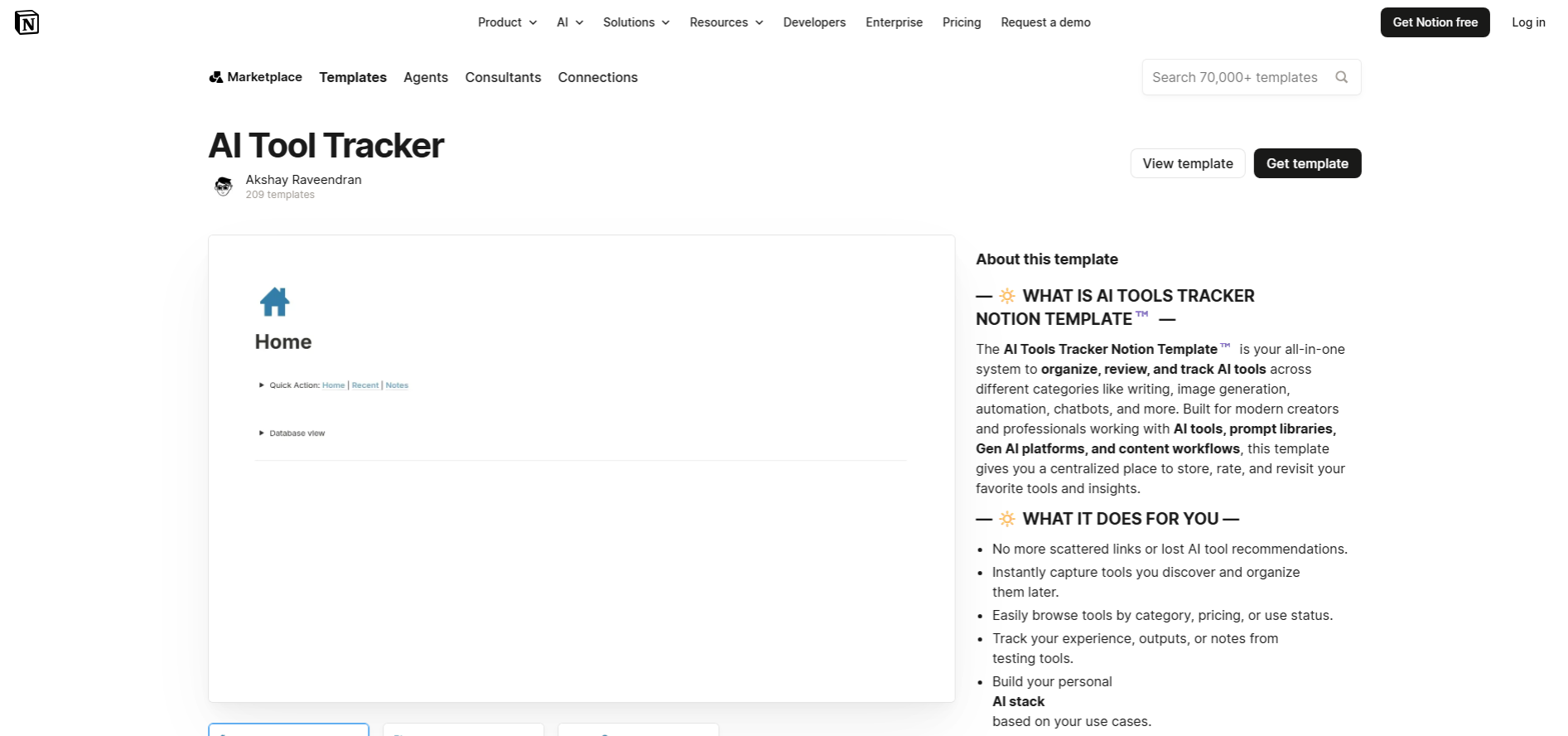
You can’t track your AI tools if you don’t know what they are. This free AI tool tracker template helps you keep a record of all your AI tools, build prompt libraries and even design content generation processes.
Notable features:
- Log prompts and results
- Categories for image generation, writing, research
- Filter tools by area, pricing, status and ratings
2. AI Usage Monitoring Dashboard Template
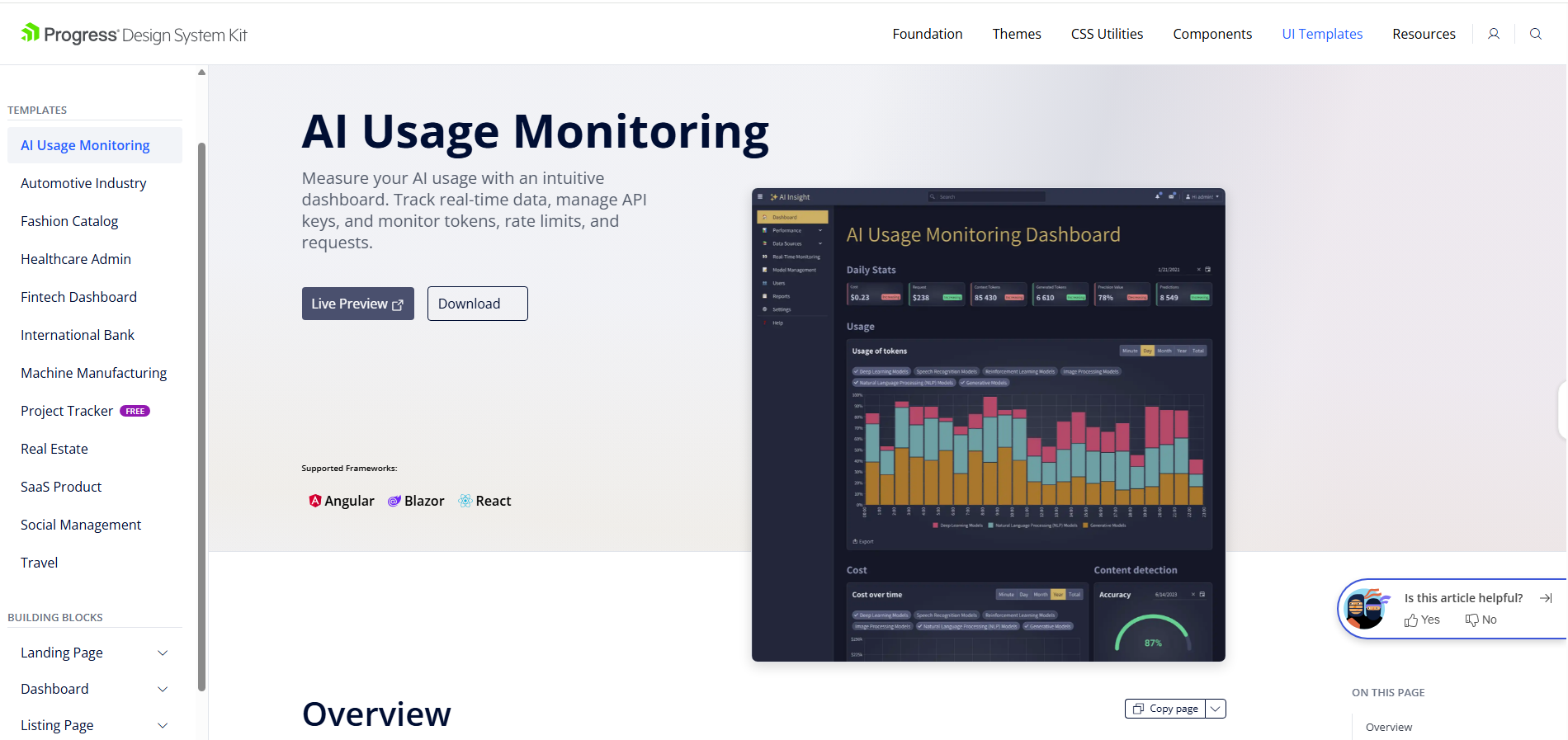
Knowing what tools you have is half the battle. You also need to keep track of your organization’s actual usage of AI. Monitoring your use can be tricky, though. This free template easily lets you build an intuitive dashboard to keep track of your API keys, token usage, rate limits and more.
Notable features:
- Supports Angular, Blazor and React frameworks
- Track cost over time (rather than just initial cost)
- Monitor content accuracy scores
3. AI Dashboard Template
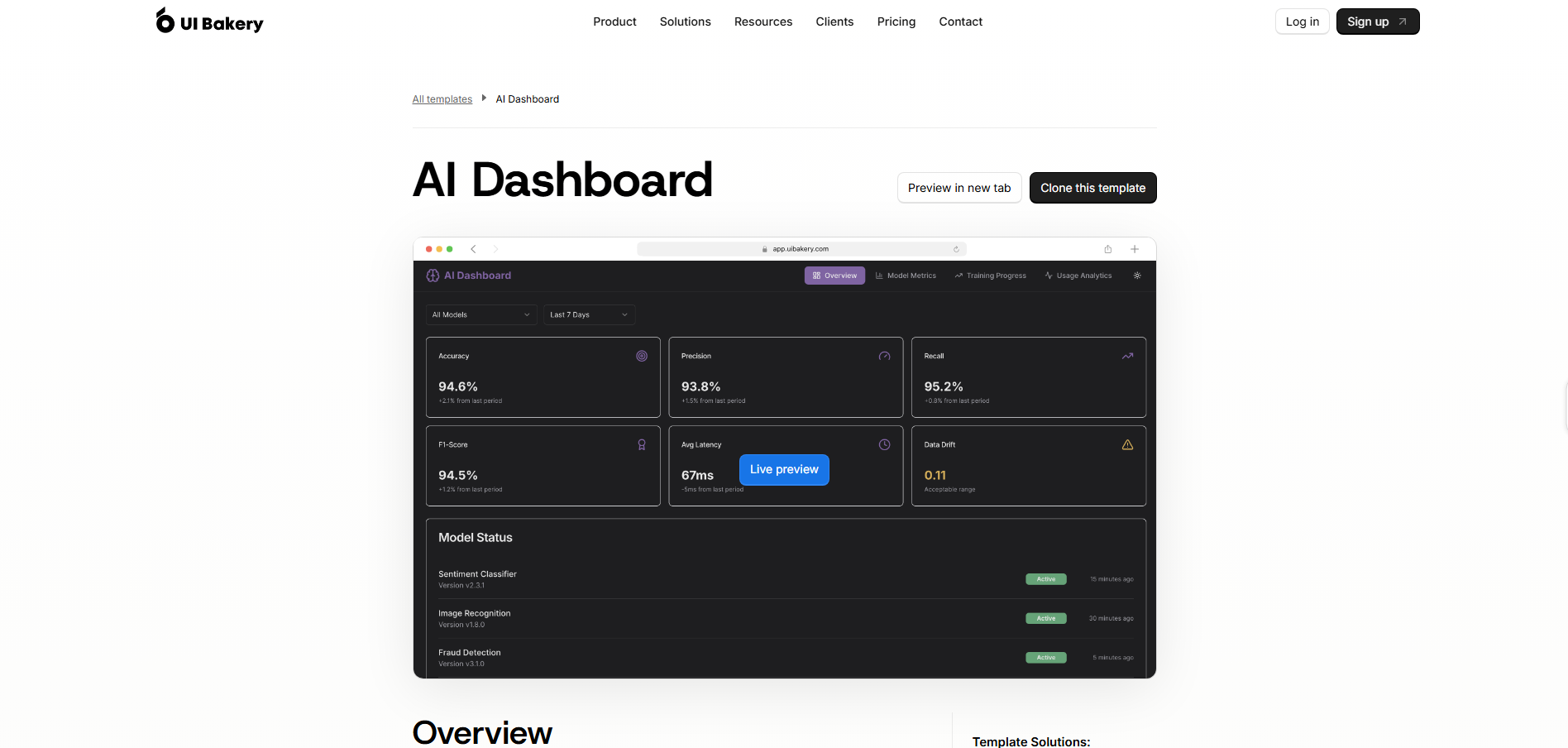
You can track all your AI tools with this template and track performance across your organization. Keep all your metrics and usage analytics in one place with this AI monitoring template and easily make minute-by-minute decisions backed with data.
Notable features:
- Real-time monitoring
- Includes error analysis and version comparisons
- Monitor usage and resources
4. AI Verify Testing Framework
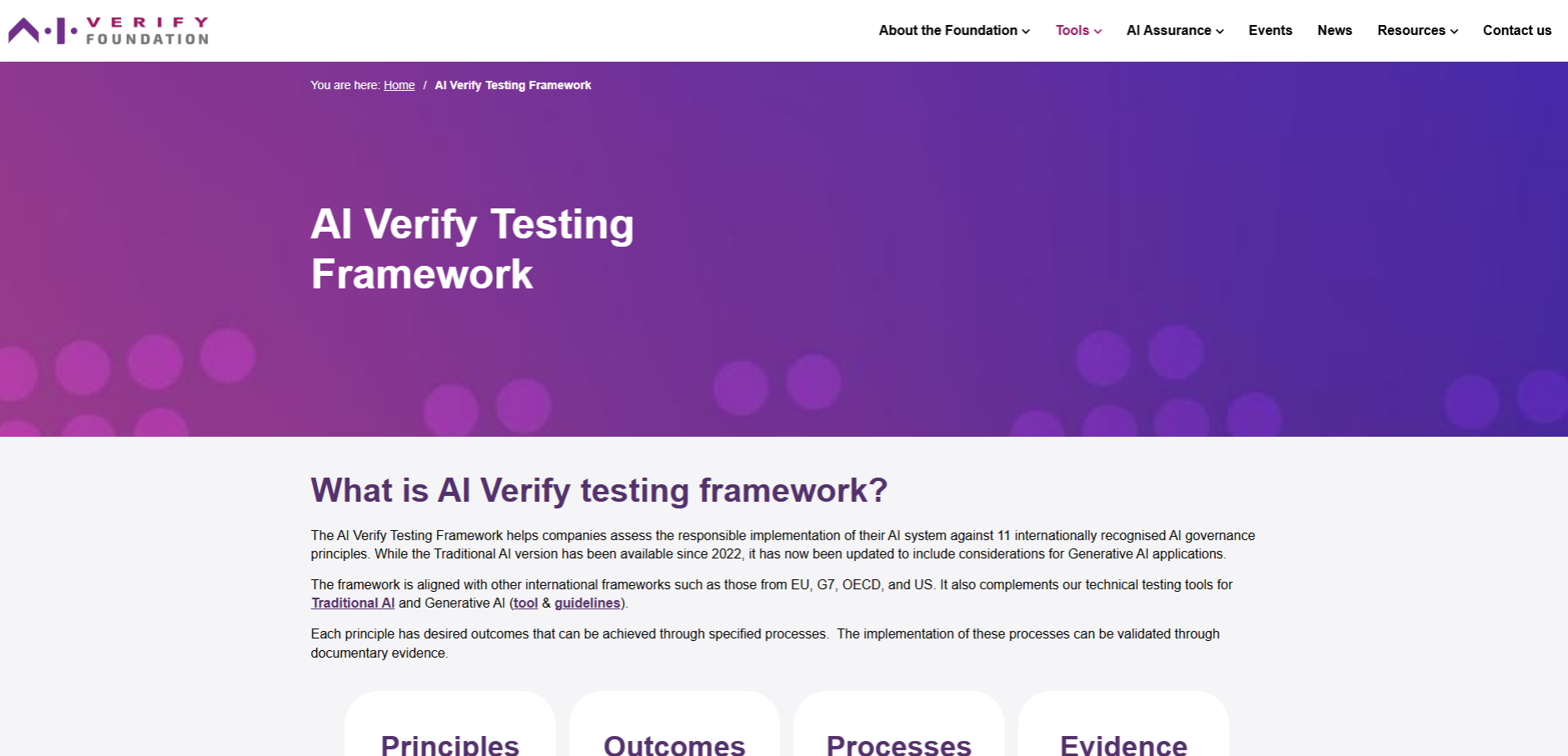
Whether you use a chatbot or generative AI, this AI monitoring template will guide you through 11 governance principles, which seriously simplifies monitoring. Simply define how you want each principle to apply to your organization, what actions are needed to achieve your goals and provide proof that you’re on the right track.
Notable features:
- Aligned with AI governance frameworks from the ASEAN, EU, OECD and others
- Evaluate AI systems based on criteria like transparency, explainability, safety and additional key performance indicators
- Includes process checks and elaboration sections to help you mark your progress
5. AI Impact Assessment Tool
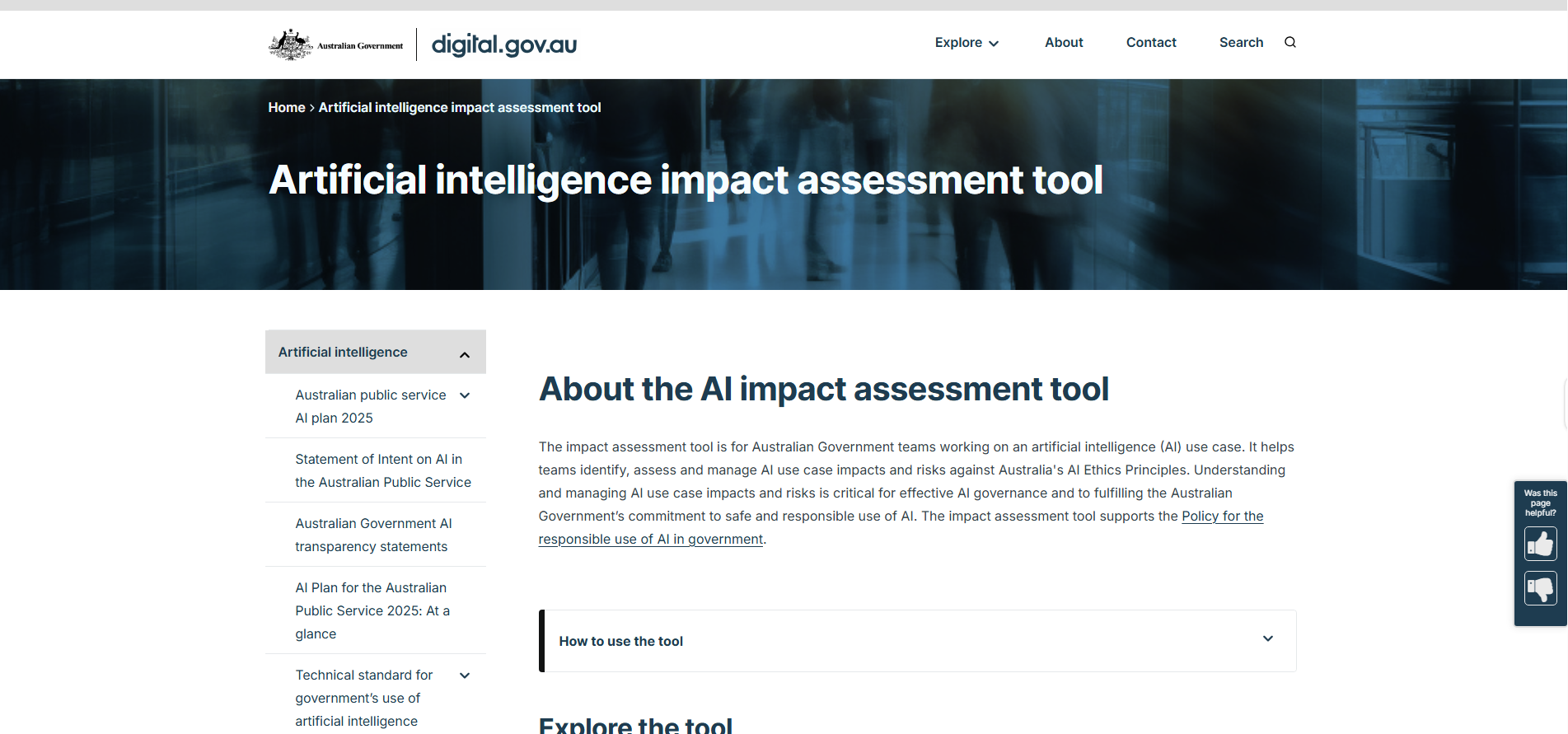
Although it was created for the Australian government, this AI impact assessment can be used by any business or organization. It requires you to set up systems for monitoring AI and it specifies who is responsible for what.
Notable features:
- Downloadable as a Microsoft Word document
- Log use cases and owners for each AI tool
- Assess AI in terms of fairness, reliability, privacy, transparency, contestability, human-centered values and accountability
6. Microsoft Responsible AI Impact Assessment Template
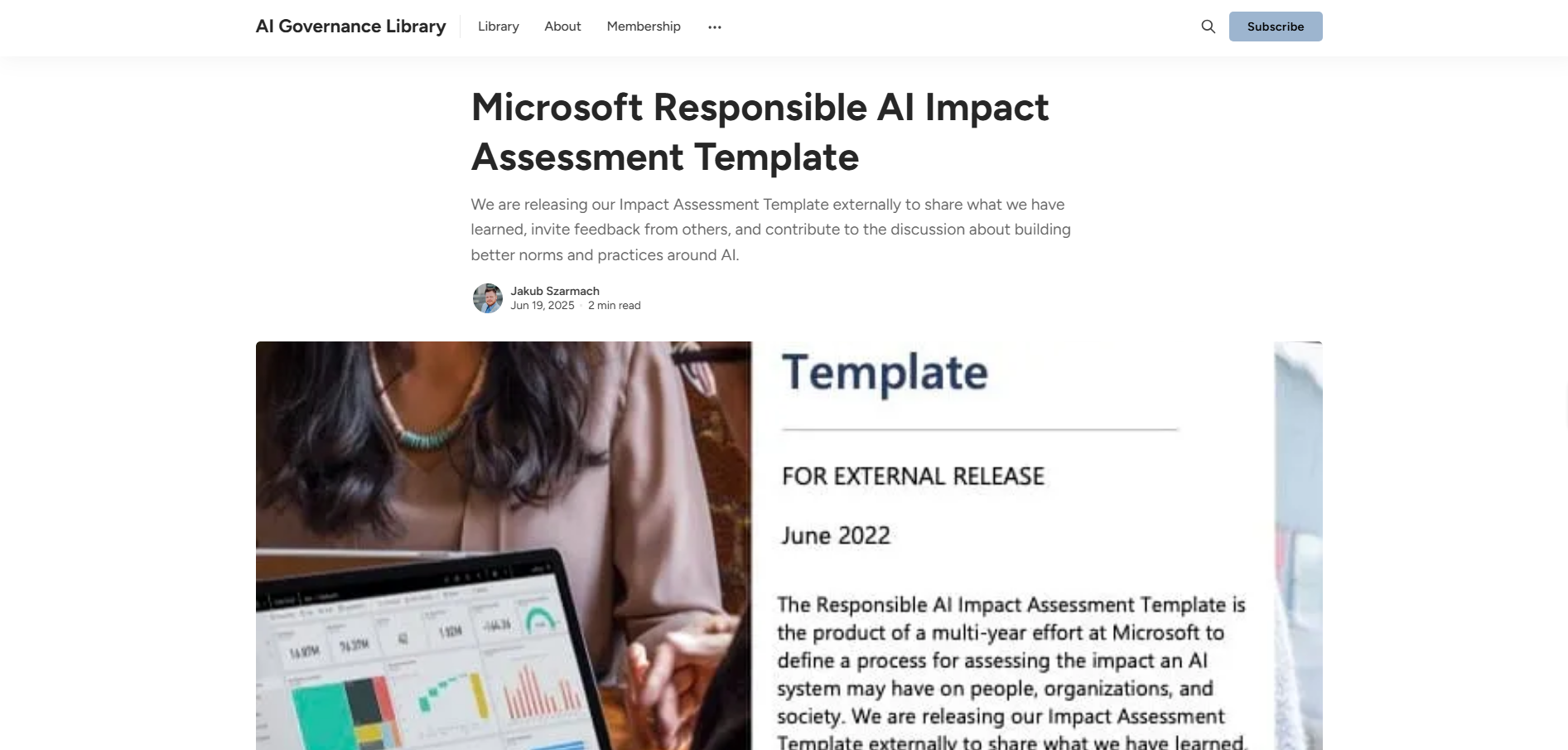
Originally released by Microsoft in 2022, this free AI monitoring template is another way to check your AI for potential risks. This is Microsoft’s actual governance framework, so if you want to go beyond monitoring and into governance, it’s an incredibly helpful tool. The template is also available directly from Microsoft as a PDF.
Notable features:
- Downloadable as a PDF
- Map stakeholders to each AI tool
- Score every AI system against Microsoft’s Responsible AI Standard
7. Model Documentation Template
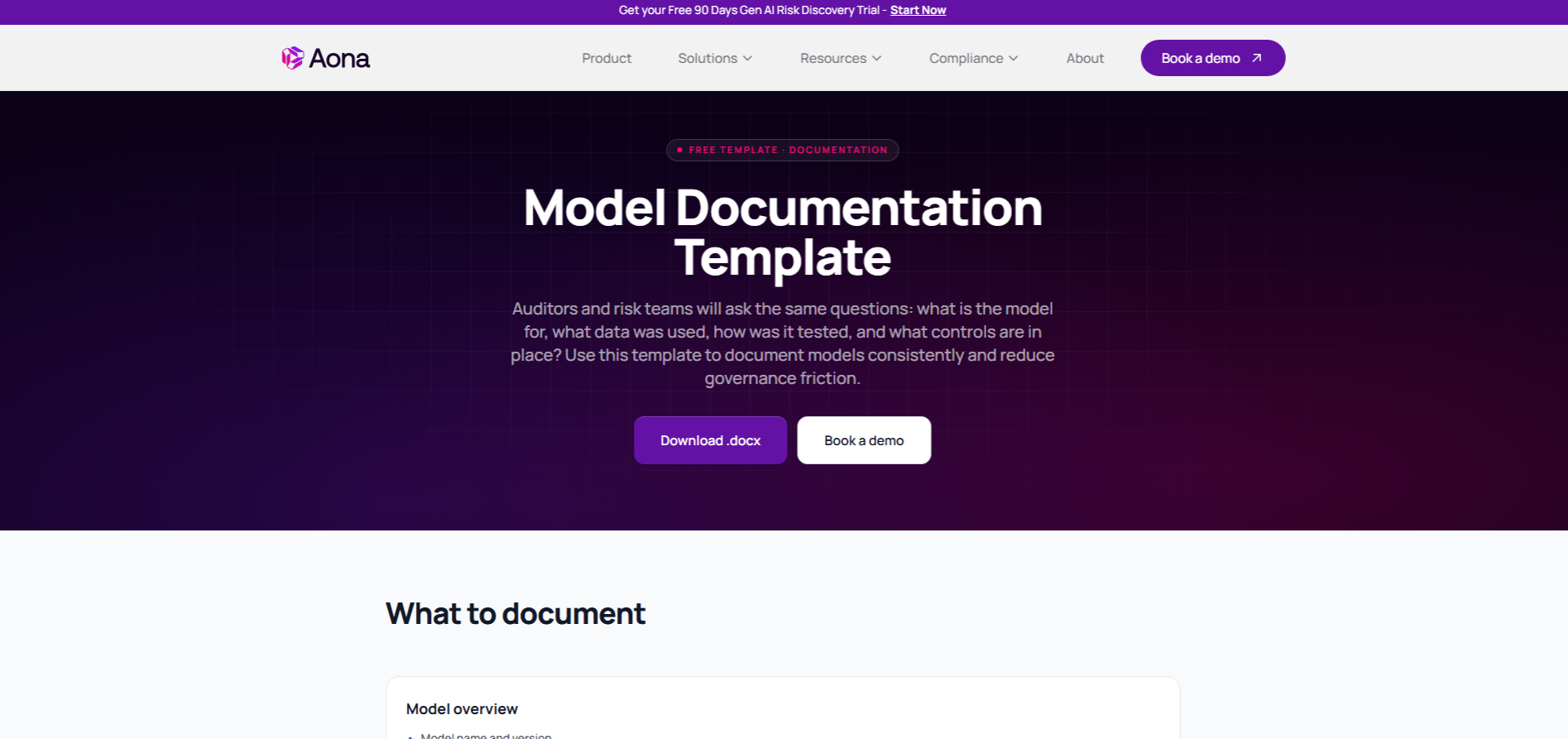
AI monitoring is much easier when you have documentation in place that shows how the model changed overtime. This free AI monitoring template helps standardize your model documentation by prompting you to include everything from evaluation metrics to limitations and prohibited uses.
Notable features:
- Document includes thresholds for monitoring and alerting
- Supports 30-day, quarterly or annual review cadences to keep this a living document
- Captures metrics on accuracy, F1, calibration and hallucinations
8. AI Risk Assessment Template
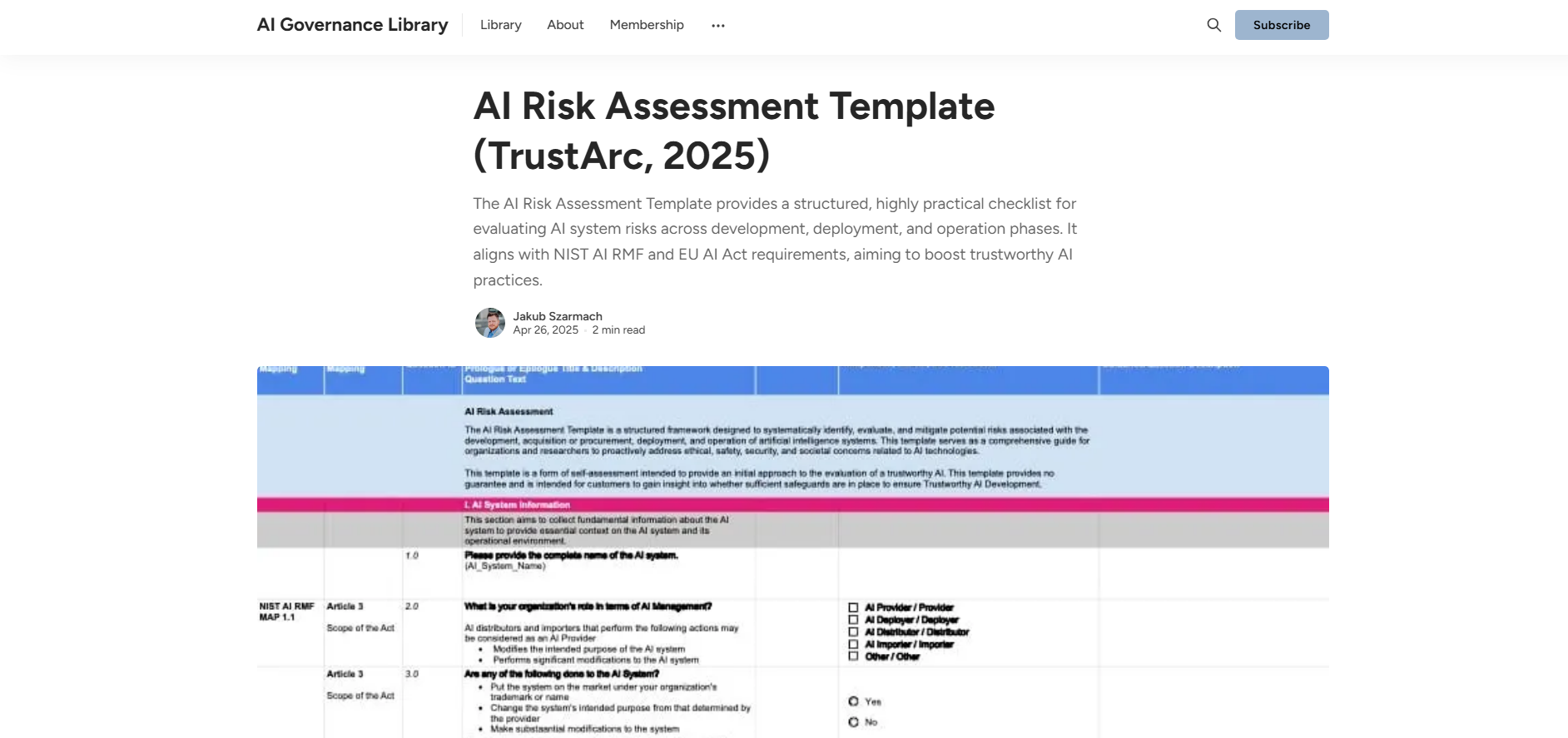
AI systems require varying levels of oversight depending on their risk. The AI risk assessment template from the AI Governance Library helps you assess risk across all models, allowing you to appropriately allocate resources when monitoring various systems.
Notable features:
- Contains requirements for auditing and trustworthiness validation
- Assesses human-in-the-loop and training
- Provides resources for threat modeling, tolerable risk levels and red teaming
9. AI Governance Committee Charter Template
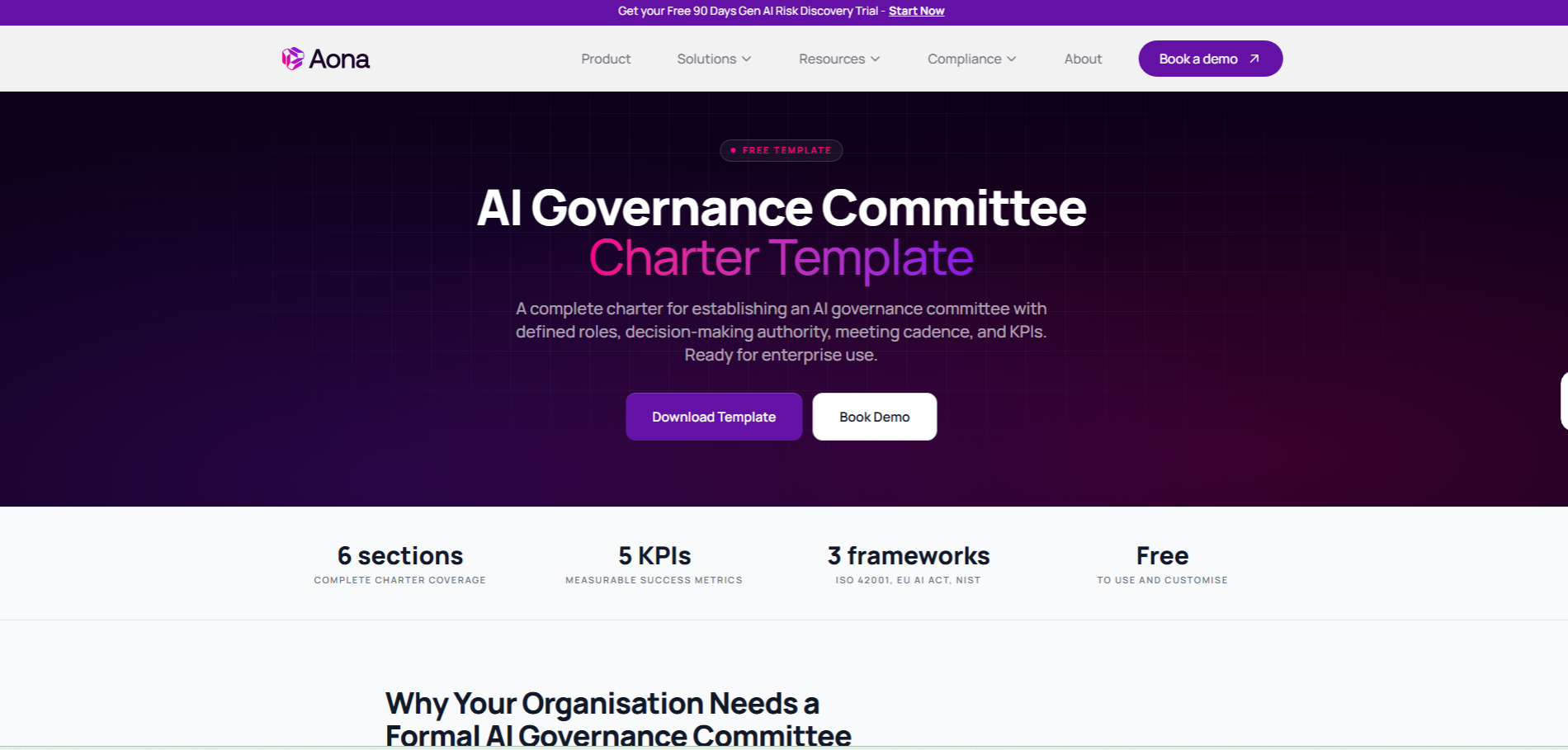
AI monitoring is only effective if someone actually does something about it. Use this template to draft your AI governance committee charter. This committee can impact monitoring, testing, implementation and more.
Notable features:
- Clear definition of the committee’s purpose and members’ roles
- Provides a decision making framework to ensure consistency
- Define coverage area for approval of AI tools, how quickly security incidents must be responded to, how audit findings are shared
10. AI Auditing Checklist Template
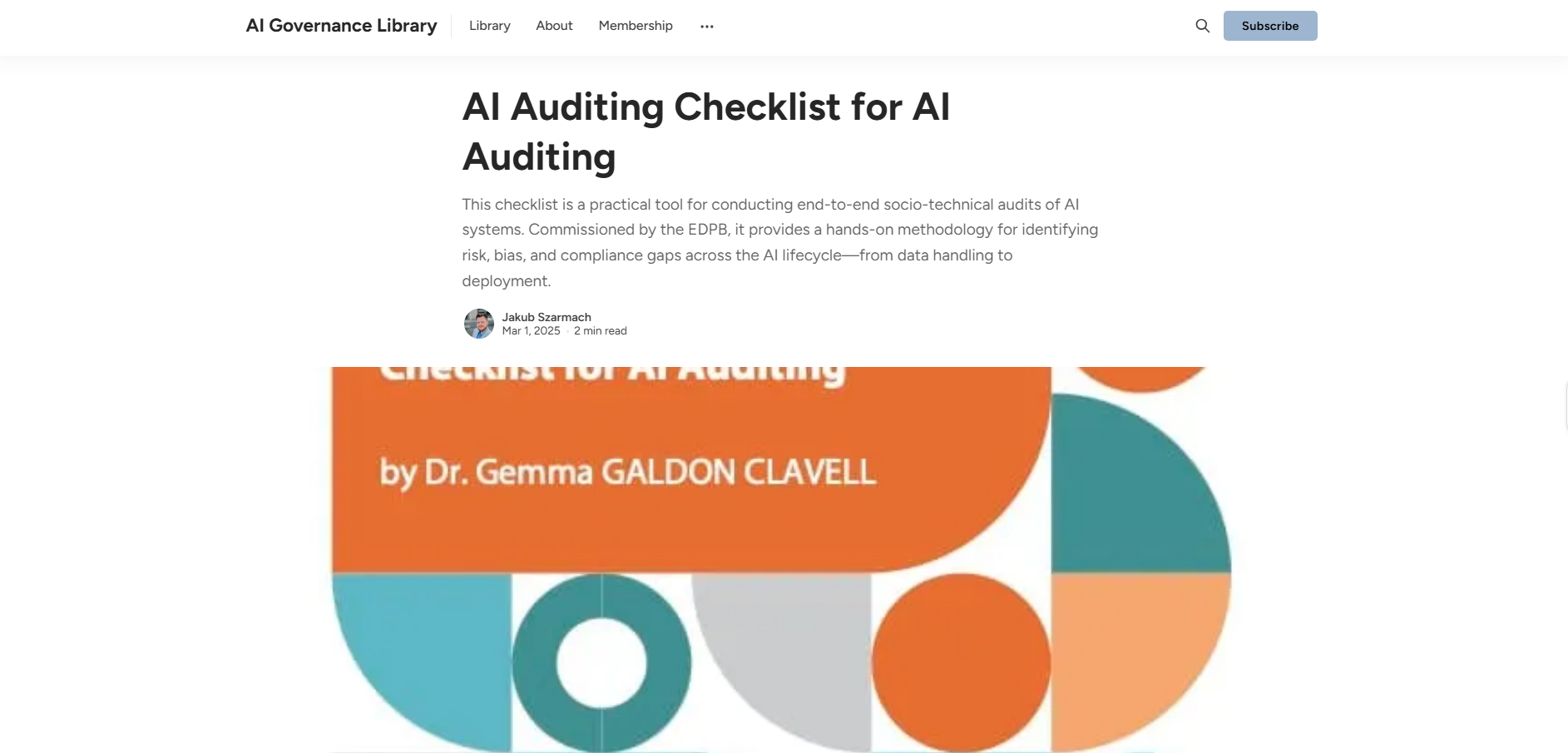
Audits form an important component of continuous AI monitoring. This audit readiness checklist from the AI Governance Library guides you through getting (and staying) audit-ready, with steps for every phase of the AI lifecycle from sourcing data to deploying your solution.
Notable features:
- Follows the End-to-End Socio-Technical Algorithmic Audit method
- Breaks the audit process into five steps
- Offers guidance on structuring audit reports
Don’t Forget Shadow AI
Shadow AI is the use of AI tools that employees adopt without IT approval or security review, from personal ChatGPT accounts to unsanctioned browser extensions. It is now a measurable breach vector: one in five organizations IBM surveyed for its2025 Cost of a Data Breach Report traced a breach to shadow AI. Only 37% have policies to detect or manage it. High shadow AI usage added US$670,000 to the average breach bill.
Monitoring shadow AI starts with an AI inventory: log every tool, owner and use case in a tracker like template #1, then compare that inventory against network traffic and expense reports to surface unapproved tools. Pair the inventory with a clear AI usage policy so employees know which tools are sanctioned and how to request new ones.
IBM’s security lead frames the stakes plainly. As Suja Viswesan, Vice President of Security and Runtime Products at IBM, put it when the report launched:
"The data shows that a gap between AI adoption and oversight already exists, and threat actors are starting to exploit it. The report revealed a lack of basic access controls for AI systems, leaving highly sensitive data exposed, and models vulnerable to manipulation. As AI becomes more deeply embedded across business operations, AI security must be treated as foundational. The cost of inaction isn’t just financial, it’s the loss of trust, transparency and control."
- Suja Viswesan, Vice President, Security and Runtime Products, IBM. IBM Newsroom, July 2025. Source
An AI inventory template is the fastest first control: you cannot secure or audit tools you have not logged.
The Missing Piece in Most AI Monitoring Programs
Templates are a great baseline for getting started with AI monitoring, but only if they’re fed quality data. Many of the solutions discussed in this guide are designed to monitor text-based AI: chatbots, generative utilities, written responses. But voice represents some of the highest-risk AI usage, something templates typically don’t cover.
That’s the challenge Modulate set out to solve. Velma, Modulate’s voice intelligence platform, empowers organizations with an understanding of what’s really going on in voice conversations (a customer call, AI voice agent interaction or contact center exchange) as it’s happening. Rather than relying on the traditional method of feeding a transcript into an LLM after the fact, Velma is an enterprise-ready, purpose-built Ensemble Listening Model (ELM) that detects nuances like tone, stress, sentiment and context shifts in real time, at a fraction of the price.
AI agent guardrails and policy enforcement are two of the most actionable use cases for AI governance teams. When it comes to AI guardrails, Velma audits AI voice agents in-context. Velma spots hallucinations, off-script replies and missed distress signals in real time before they have a chance to compound. Don’t treat deployed agents like black boxes. Velma provides you with a transparent, auditable transcript of every interaction, informed by your code of conduct and operating procedures.
Velma monitors live calls for policy enforcement, flagging and enforcing SOPs to keep your conversations professional, compliant and on-brand. Receive in-the-moment alerts when something gets off-policy and automations that escalate to supervisors when things go off the rails. For the contact center side of this problem, see our guide to call center monitoring.
Achieving Your Governance Goals with Velma
All of Velma’s features map to the governance needs described above. The Model Documentation Template prompts users for threshold values and review frequencies. Velma generates the time-stamped, auditable documentation your reviews demand automatically.
The AI Auditing Checklist requires a verifiable, end-to-end chain of responsibility. Modulate’s reporting is customizable to meet your desired reporting hierarchy.
And the AI Governance Committee Charter calls for formal security incident response procedures to be put in place, which becomes far more actionable when your team is alerted in real time to a potential security issue, rather than stumbling upon it well after the fact in a log.
Tools like those in this guide give you the building blocks to create strong structure around your responsible AI oversight. Modulate helps ensure meaningful actions are taken when AI has something to say. See Velma in action.
Frequently Asked Questions
What should an AI monitoring template include?
An ideal AI monitoring template will have:
- Metrics to track performance
- Identification of risks
- Assignment of owners
- Audit logs
- Tracking of cost
- Scheduled reviews
Some will also have governance workflows and alert triggers.
What are some KPIs to track for your AI systems?
That depends on the type of AI system, but the best metrics to track are usually accuracy, hallucination rates, latency, token usage, API costs, bias, reliability, user adoption and security incidents.
How frequently should you monitor AI models?
AI models that are high risk or customer facing should be monitored continuously, ideally in real-time. Lower-risk internal models may only require monthly or quarterly monitoring. Many companies choose to use a combination of continuous monitoring and periodic audits.
How much does an AI governance platform cost?
AI governance platform spending is rising fast: Gartner projects the market will reach $492million in 2026 and pass $1 billion by 2030. Vendor pricing varies with the number of models monitored and the compliance frameworks covered. The templates in this guide are free, which makes them a low-cost starting point before you commit to a paid governance platform.